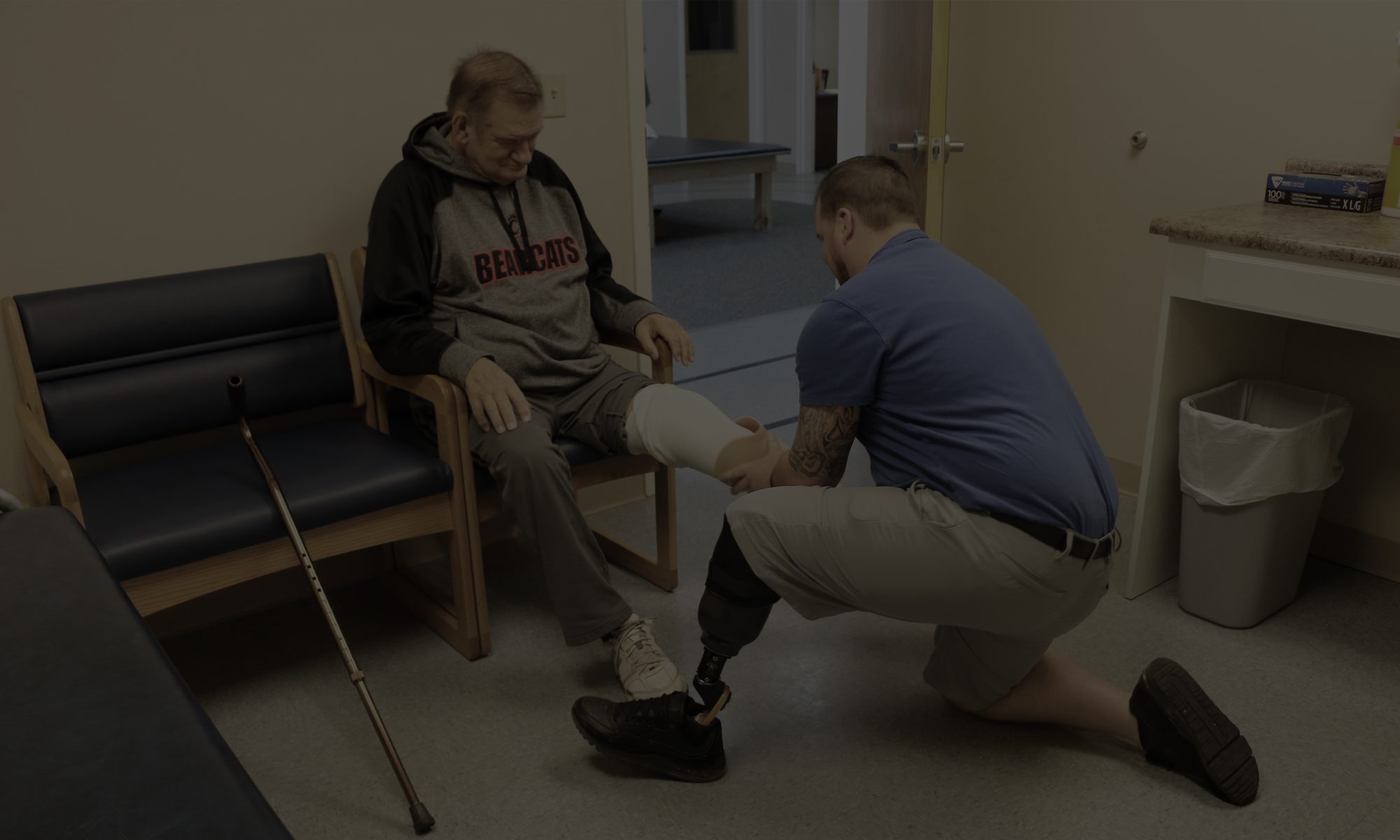
Artist, Amputee
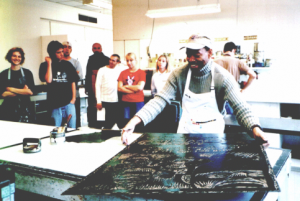
Thomas Shaw has been a professional artist for many years. He has had his work exhibited many times. All of the pictures in this newsletter are his original work. He also has been awarded an Honorary Doctorate.
An artist for many years, he spent his earlier career finding out what kind of art was going to define him. He spent many years depicting how society reflected on him in his surroundings.
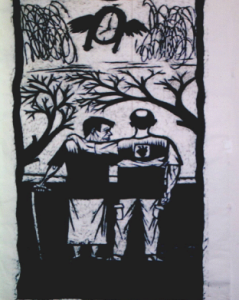 Many of his early works were about social ills. He had witnessed, drugs, gangs, etc.. Thomas works mostly in a black and white artistic medium, using inks, relief print process and woodcut techniques.
As his health issues became more prominent in his life, his artistic focus found a new avenue. Thom found a great outlet to express how he was feeling about the way his health was effecting his life.
He has produced some outstanding and thought provoking pieces, which really capture the feelings and reflections of someone going through hospitalization, dialysis and all of the life altering effects of diabetes and amputation.
One piece, “A Dialysis Fable” represents the time spent regularly undergoing dialysis and the relaxation and contemplation time it provides. Thom said “It’s not the nicest thing, but it is necessary for me to do it. I took the approach of using the four hour sessions to think and reflect. I find the time useful now”.
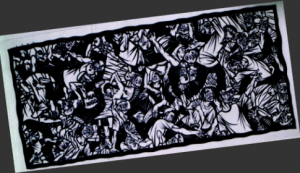 A recurring theme of his recent artwork is the symbolic placement of his heart in all of his self portraits, representing his heart bypass surgery.
Another piece, entitled “Christ Hospital: The Rough Times” reflects on a time he was hospitalized with a neck brace and IV lines.
Much of the self portraits have been well received by the art world. Thom was the first artist to have a solo exhibition at Art Beyond Boundaries, 1410 Main Street, Cincinnati. The gallery specializes in artists with disabilities.
He started an exhibit of his work at the Art Academy on August 21st. He has taught classes displaying his techniques.
He hopes is work inspires others with disabilities throughout the world.
We cannot wait to see what his artistic self portraits are now that he has completed rehabilitation and is back in the studio!
Selected One Man Exhibits:
2009: “Life Stories”, Art Beyond Boundaries
2006: “Choice of Weapons III”, Taft Museum of Art, Cincinnati, OH
2005: “Choice of Weapons II”, Artwork Gallery, Cincinnati, OH
2004: “Personal Impressions”, South Bend Museum, South Bend, IN
“Personal Impressions”, Sheldon Swope Museum of Art, Terre Haute, IN
“Personal Impressions”, Art Academy of Cincinnati, Cincinnati, OH
“Personal Impressions”, Olin College Gallery, Kenyon College, Kenyon, OH
2003: “Personal Impressions”, Huntingdon Museum of Art, Huntingdon, WV
“Personal Impressions”, SUNY College At Oneonta, Oneonta, NY
2002: “Inner Sanctums, Urban Medals, & Other Short Subjects”, Cocelia Coker Gallery, Hartville, SC
2001: “Personal Impressions”, Dayton Visual Arts Center, Dayton, OH
“Inner Sanctums, Urban Medals, & Other Short Subjects”, Weston Gallery, Cincinnati, OH
“Choice of Weapons”, Phreibe Gallery, Oshkosh, WI
“Inner Sanctums, Urban Medals, & Other Short Subjects”, 1912 Gallery, Emery, VI
“Hardcore to the Edge”, Heistand Gallery, Oxford, OH

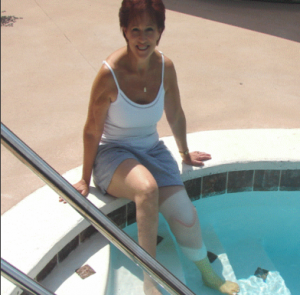 Jan Beckemeyer first came to AIM in August of 2005, for a consultation considering a below knee amputation. She had been through multiple surgeries after a motorcycle accident, which resulted in an artificial ankle. She had continued pain which was not improving, and it had become increasingly difficult to function.
 Within a month Jan had moved from a walker to a single cane, and shortly after Jan was walking unassisted. She progressed quickly and soon began researching different feet to compliment her active lifestyle. Working as a surgical technician meant standing for long periods in flat shoes, while her social life demanded higher heel shoes.
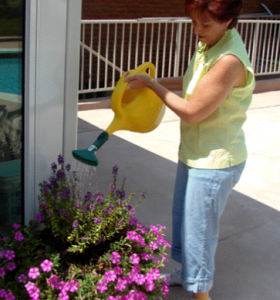 Jan has returned to her summer activities of boating and frequently visits the lake with friends and family. AIM designed an Aqualimb for her so that she could return to water activities and also use the shower.
 The effects of these caps can be devastating for patients trying to maintain productive, healthy and active lifestyles. Depending on activity level, health changes to the body and age, a lower limb prosthesis usually needs to be replaced every 2 to 5 years.
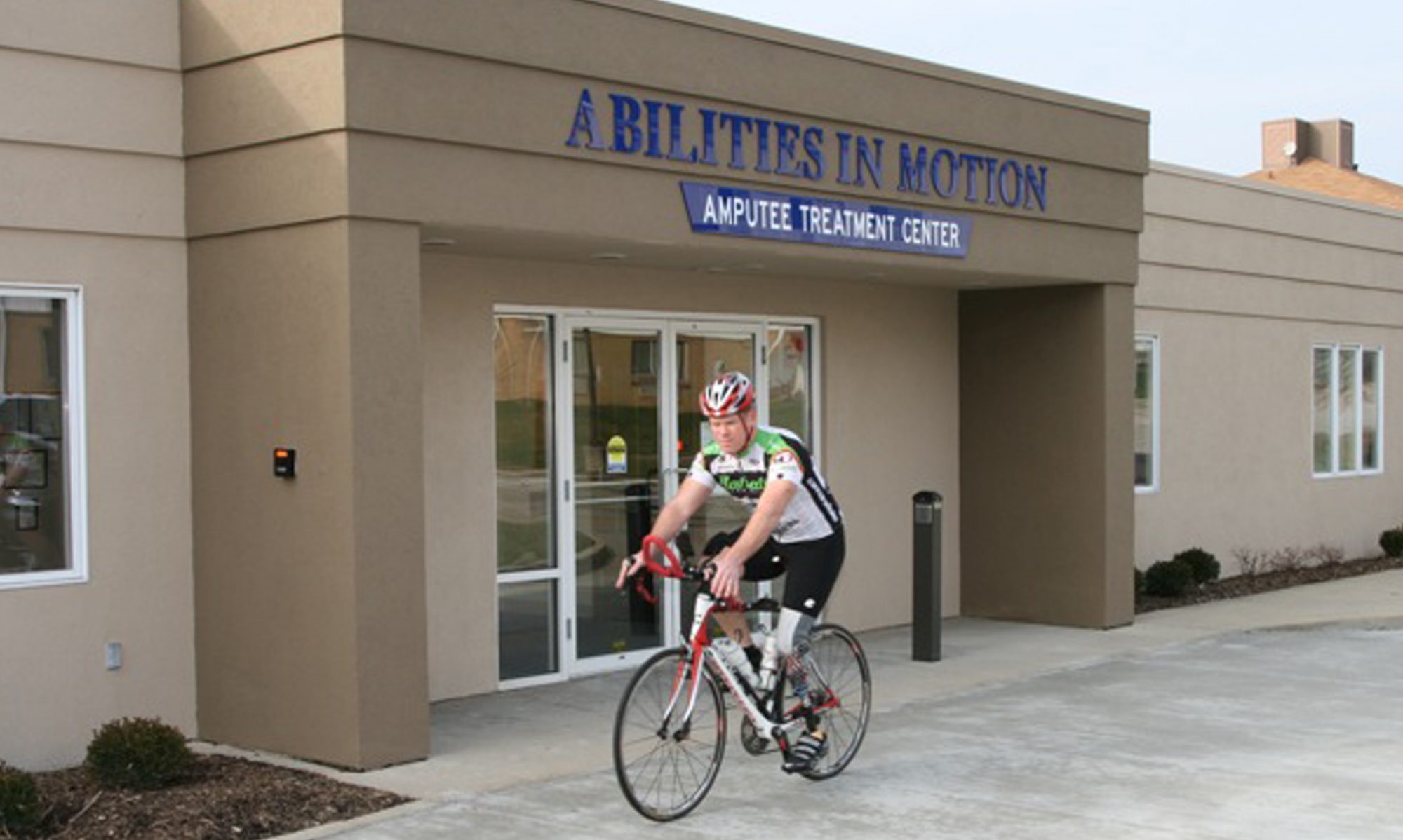

 Walter Lickliter, 57 had a right below knee amputation in July of 2004. Walter also has a left partial foot amputation. His main goal before surgery was to improve his balance and begin the process of learning to walk again. Within two weeks of being fit with his prosthesis, Walter said “I am encouraged by my progress from wheel chair to walker. I have not had any pain since just after the surgery”. He learned quickly through experimentation how to use socks to obtain a correct fit and does not feel his prosthesis limits him. “I like the comfort of my prosthesis and just being able to walk again”.
 Sarah Ammons underwent surgery for a below knee amputation in 2002. Sarah said “I expected to have less pain, as I have a great deal of phantom pain”. She did not expect to be walking unassisted immediately, “I expected a long rehab”. Although undergoing a second surgery earlier this year, she is walking without assistance.
 Sam Crosby has a left below knee and a right partial foot amputation. For Sam, a former college quarterback, rehab went very smoothly. “I just expected to be able to walk and I pretty much did. I knew I would be able to walk without crutches”. Sam reported that he never really had any pain and that learning sock fit was easy.
 David Fischer became an above knee amputee just a few months ago in May. David says he wasn’t really sure what his expectations were prior to surgery as it happened so quickly. He said of his expectations upon receiving his prosthesis “I didn’t expect I would just get up and walk. I had a pretty good idea about the rehab process”. After initial fitting and physical therapy, David says he was more confident of being able to return to normal mobility. He has suffered from some phantom pain “but I’m managing well”.